Plant species in the Ardèche
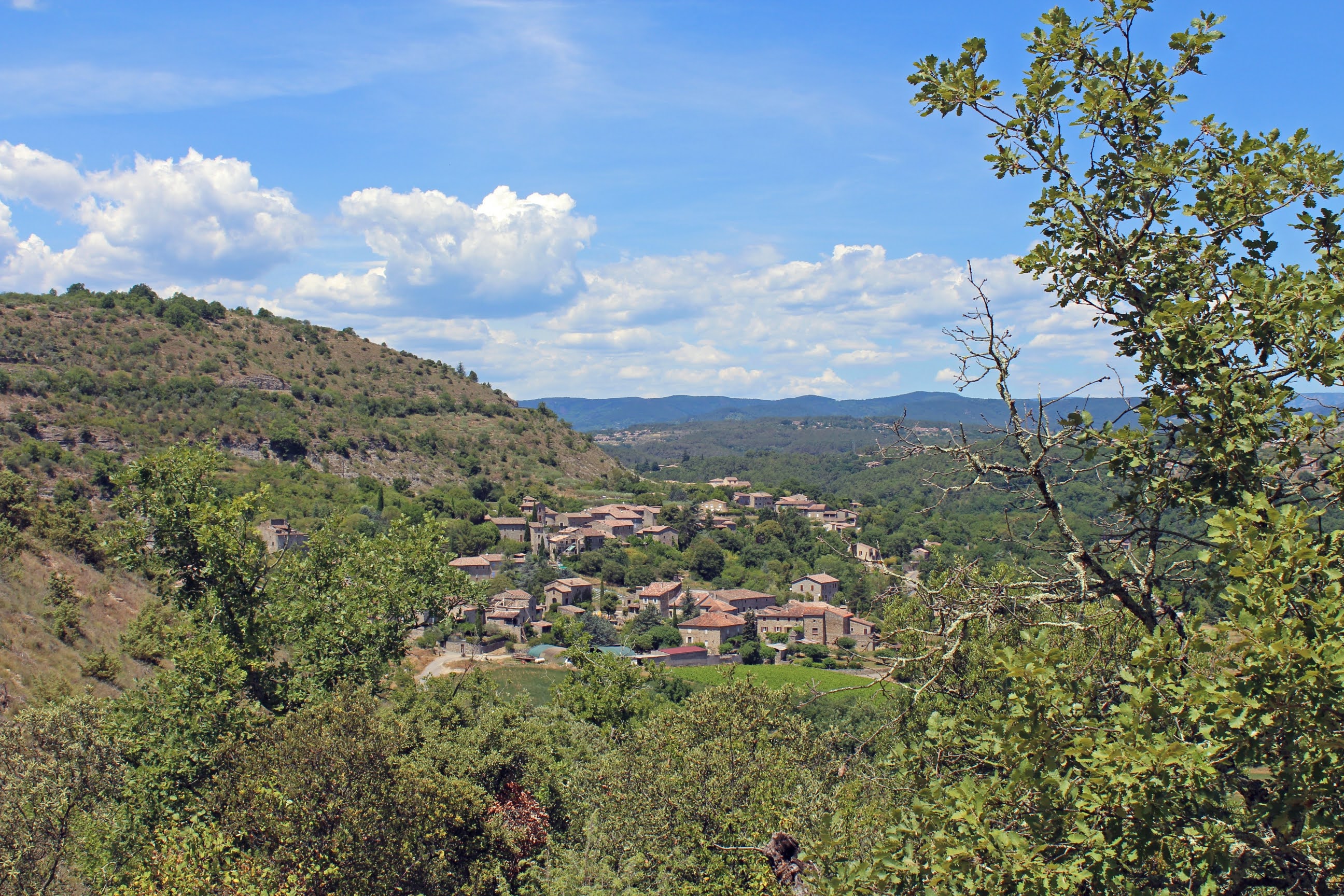
- Used identification keys on the flora of the areas we visited
- A day-by-day report of our Botanical Journey
- A list of all recorded species
Useful identification keys
- Paul Fournier: Les Quatre Flores de la France (Paris 1961)
- Jean-Marc Tison and Bruno de Foucault: Flora Gallica - flore de France (Paris 2014)
Report of this BotanicalJourney
11 June 2022: Surroundings of Château de Chassagnes (Google map)
After
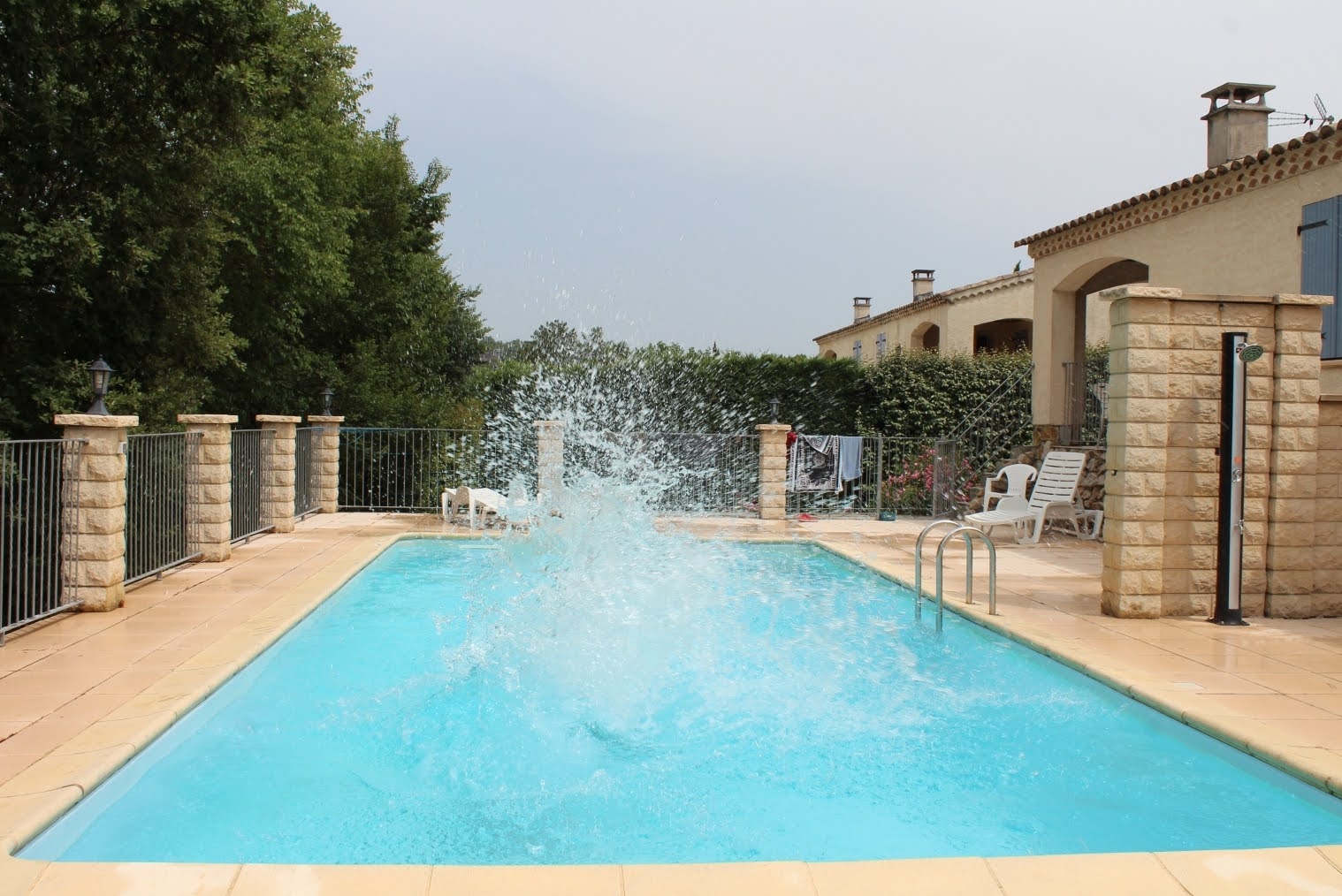
a refreshing swim in the pool on our day of arrival, we took a
short evening walk to explore the surroundings of the nearby
Château de Chassagnes. This provided us with the opportunity to
start a list of plant species with more or less common plant
species. We recorded nice things like Anagallis
arvensis
subsp. foemina, Ononis arvensis, Bituminaria bituminosa,
Galium pumilum, Teucrium montanum and
Polygala calcarea. On the many walls and rocks we found
typical species like Asplenium
adiantum-nigrum, Sedum rupestre, Umbilicus rupestris and Asplenium trichomanes.
In total, we recorded 115 different species during this short walk. The unexpected discovery of Epipactis muelleri on a construction site right behind our apartment surprised us. By the time bats flew around our heads and Himantoglossum hircinum was barely visible in the twilight, we decided it was time to head to bed. After another dive in the swimming pool, of course.
12 June 2022: Around Chassagnes (Google map)
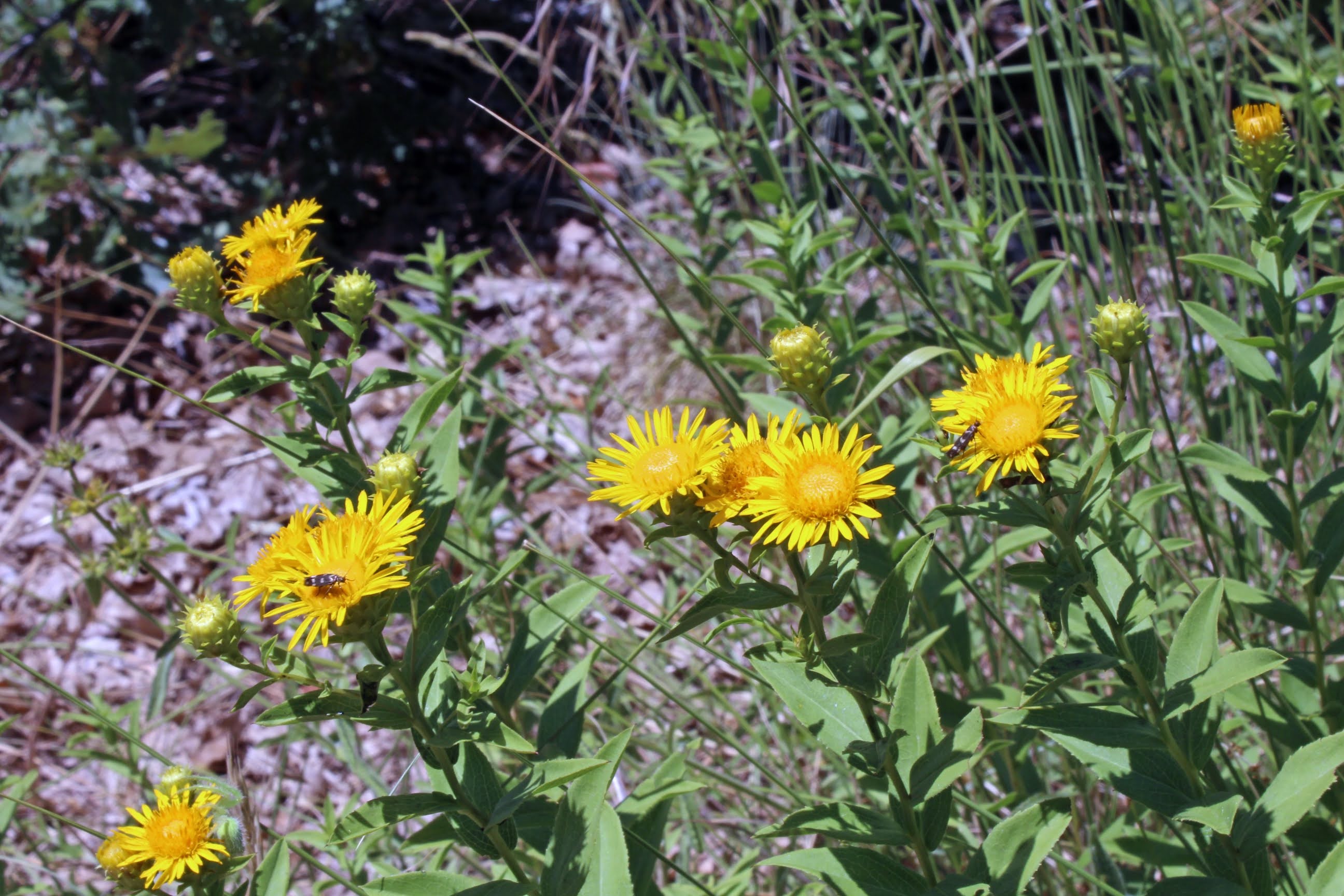
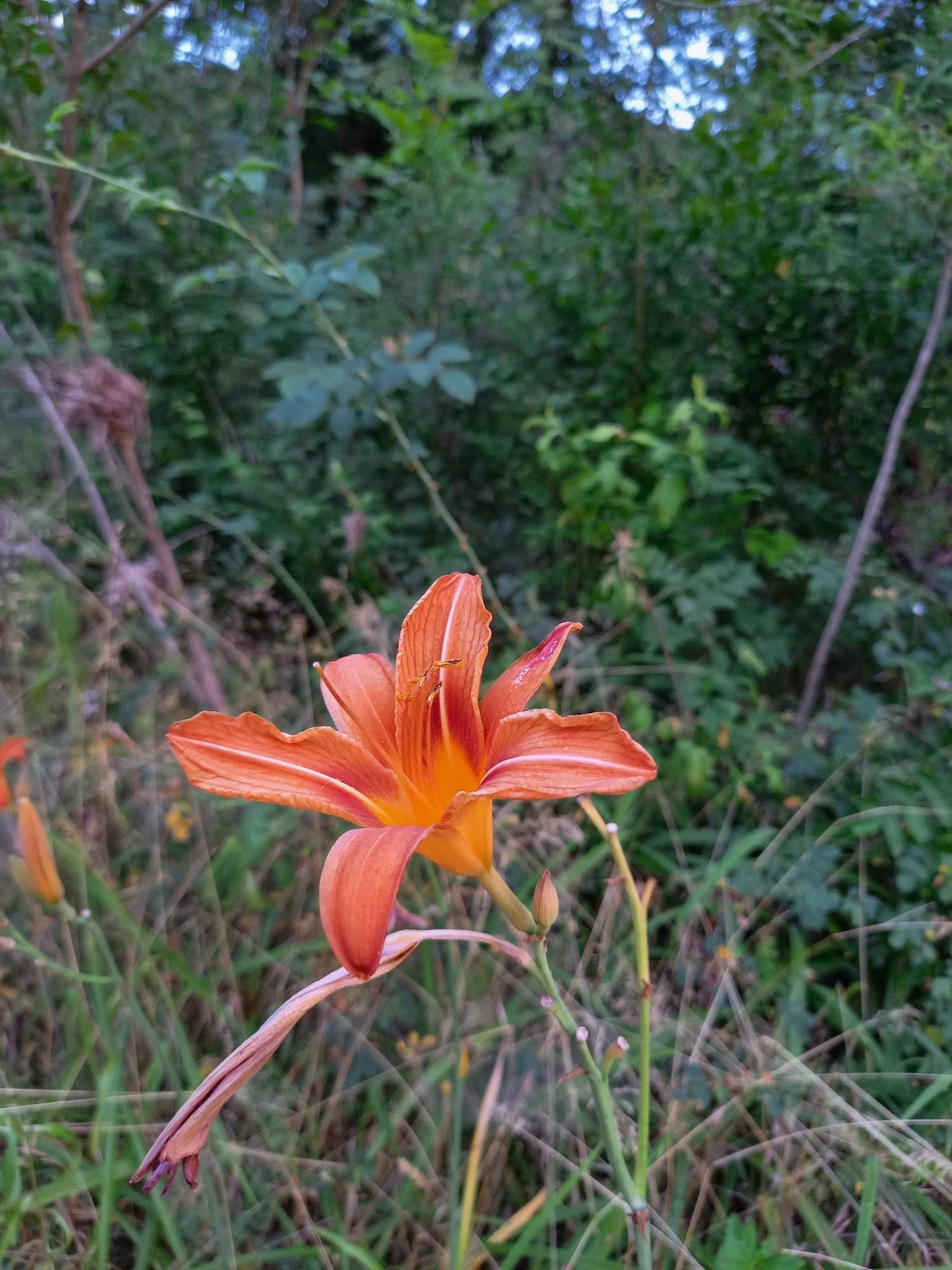
The following day we decided to explore the surroundings of Chassagnes, the village where our holiday home was located. We strolled past the castle and down to the Chassezac river, where we recorded species like Helminthotheca echioides, Silene italica and Teucrium chamaedrys. Unfortunately, there were no footpaths alongside the river, but we managed to reach the shore by following a dirt track through some fields. In these fields, we recorded species such as Dianthus armeria, Jasione montana, Biscutella laevigata and Salvia pratensis. In the river, we found Myriophyllum spicatum.
13 June 2022: Around Le Cheneviou (1149m) (Google map)
We came across a stream with water and plenty of dragonflies, supporting plant species like Veratrum album, Phyteuma nigrum, Montia fontana, Lathyrus linifolius and Ornithogalum umbellatum. As we ventured further into the forest, mostly composed of Pinus nigra, we found Scorzonera humilis, Lepidium heterophyllum and Luzula nivea. Our wanderings eventually led us to an tarmac road, which we followed back to our car. Along the road there were plenty of new plant species to be recorded, like Barbarea intermedia, Anthericum liliago, Genista tinctoria and Hippocrepis comosa.
13 June 2022: Ruisseau de Petit Paris near Montselgues (Google map)
When we drove back to the main valley, a small stream with moist meadows attracted our attention. At first we noticed the white flowers of Trocdaris verticillatum. The meadow itself was adorned with numerous specimens of Dactylorhiza, a group of orchids that can be quite challenging to identify accurately. Unfortunately, the plants had completely dried out, rendering it impossible for us to establish their precise species name. Nonetheless, they were accompanied by Anthyllis vulneraria and Caltha palustris. The small stream also offered Chrysosplenium oppositifolium, Cardamine pratensis and Viola palustris. There was even a small waterfall with stones covered in moss vegetation. It was a nice place to be indeed.
13 June 2022: Sablières (Google map)
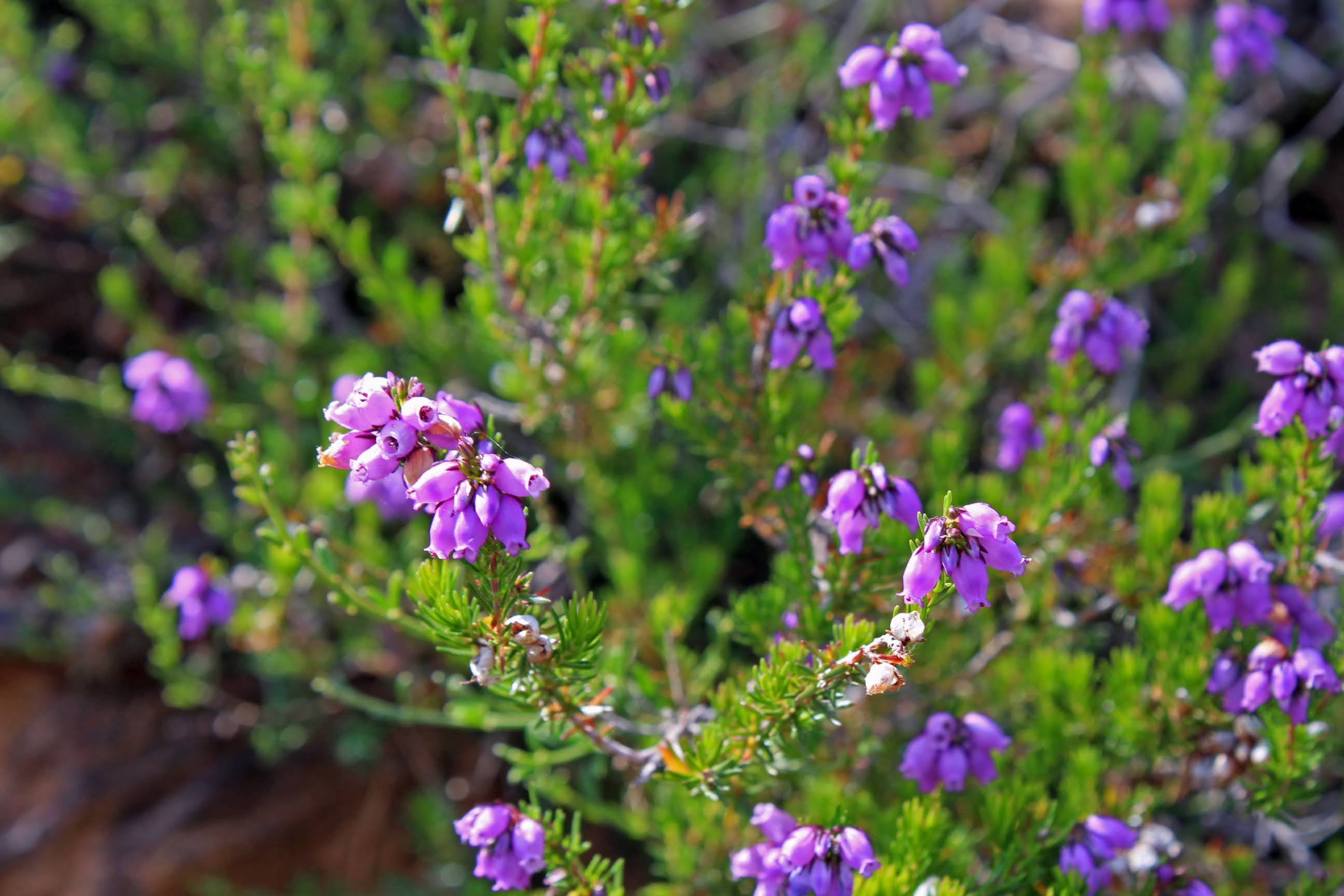
13 June 2022: Les Chanels (Google map)
The village of Les Chanels, located near the town of Payzac, is a beautiful place. The houses are old and the roads are narrow. Although there was a gîte, we did not encounter any other tourists. Or Frenchman, for that matter: the town appeared to be completely deserted. This unexpected solitude provided us with an opportunity to explore the alleys and narrow staircases undisturbed. We recorded (mainly on the walls of the houses) species like Campanula erinus, Asarina procumbens and Antirrhinum majus. The vegetation displayed clear Mediterranean influences, a stark contrast to the sub-alpine environment we had experienced earlier that day!
14 June 2022: D122 near Suc de Montivernoux (1312m) (Google map)
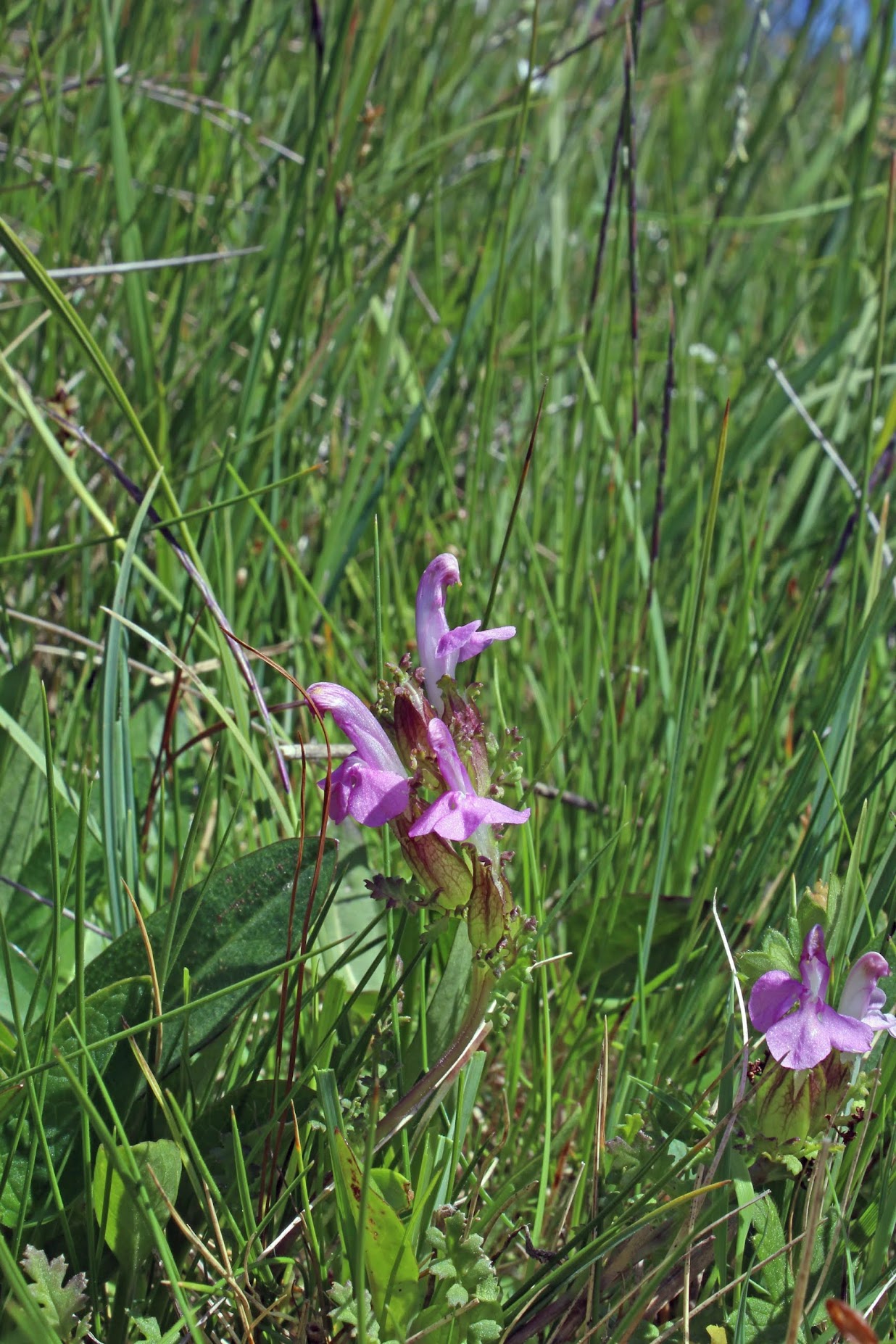
In order to record more sub-alpine plant species, we headed north towards Mont Gerbier de Jonc, situated at an elevation of 1551 meters. Along the way, we came across a moist meadow next to the road teeming with orchids and Eriophorum angustifolium. Already in the ditch separating the meadow from the road, we recorded nice plant species like Pingucula vulgaris, Hypericum maculatum, Trollius europaeus, Alchemilla monticola and Pedicularis palustris.
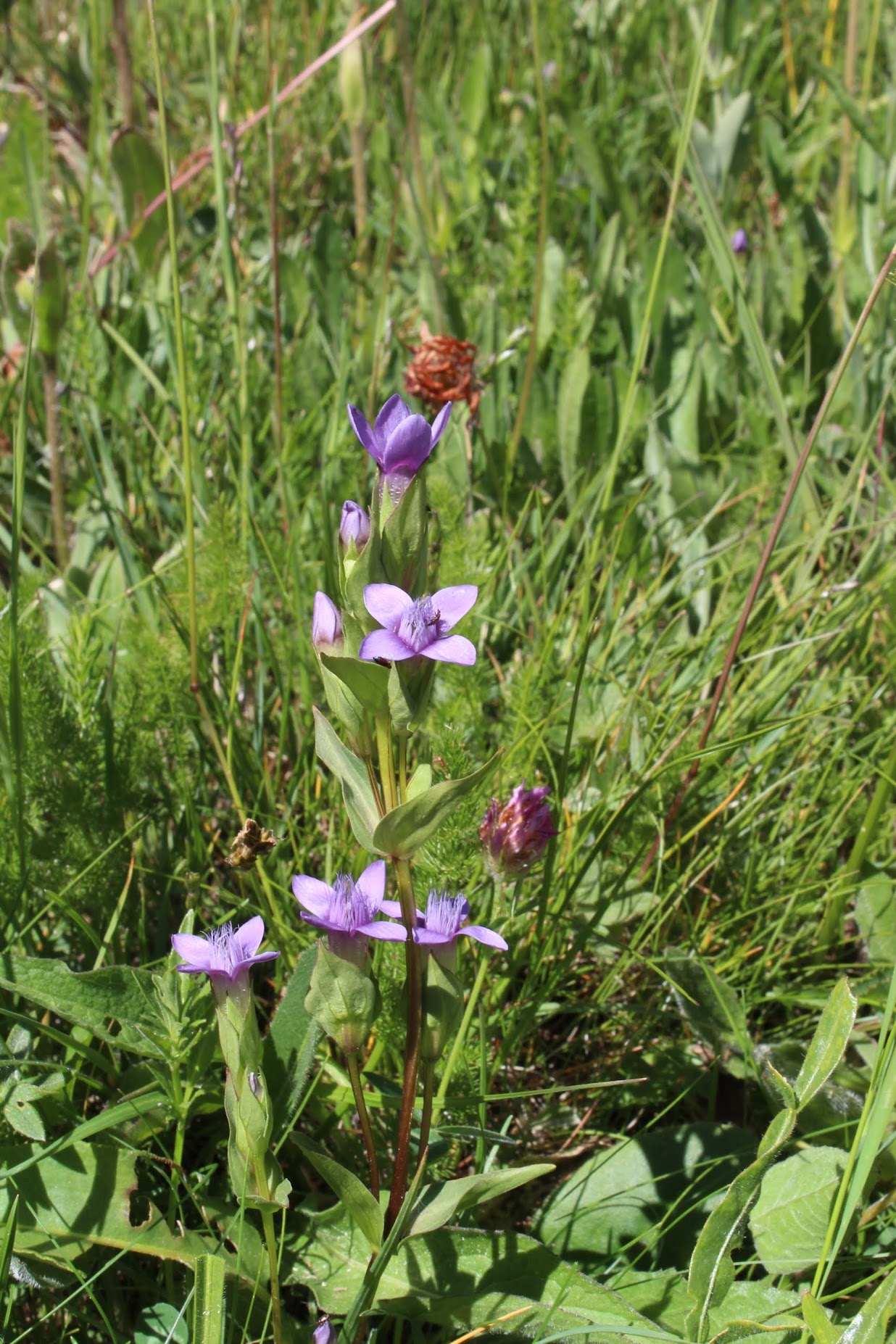
14 June 2022: Col du Pranlet / Suc d’Ourseyre (1371m) (Google map)
After arriving at Col du Pranlet, we embarked on a footpath leading to the hilltop Suc d’Ourseyre, at 1371 meters above sea level. At the outset, we walked through a grassy environment and recorded Crepis mollis and Antennaria dioica. As we ascended, the hill slope became adorned with pine trees, beneath which we discovered Gentiana cruciata, Ranunculus montanus and Cicerbita plumieri. One striking observation was the abundance of Dactylorhiza specimens in a more open section of the forest, which we believe to be Dactylorhiza sambucina. However, the flowers had dried out, adding some uncertainty to our identification. We also noticed Gymnadenia conopsea here.
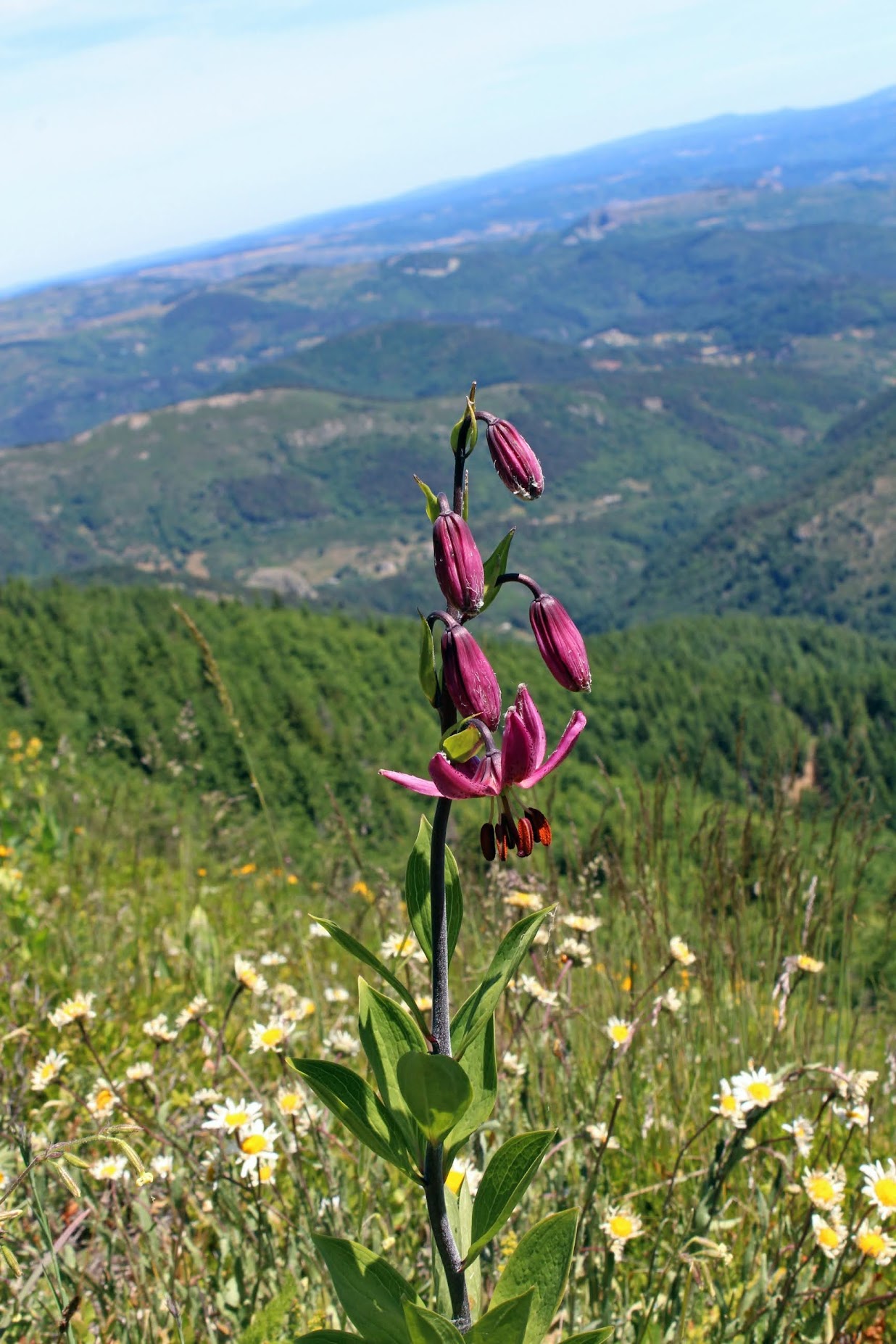
14 June 2022: Mont Gerbier de Jonc (1551m) (Google map)
After a successful stop at the Suc d’Ourseyre, we visited the Mont Gerbier de Jonc at an elevation of 1551 meters above sea level. This hill is a remarkable steep landmark with a volcanic origin: it is a lava dome that formed millions of years ago inside the crater of a volcano. Although the outer parts have eroded over time, the dome still remains. The majestic Loire River, which features in our BotanicalJourney in the Loire valley, originates from Mont Gerbier de Jonc. We had heard that the hill was interesting for plant species.
Upon our arrival, we were greeted by an enormous parking area, and we soon learned that the hill was a UNESCO-protected site. Consequently, there were numerous asphalted paths for cars, a large number of visitors, several bars and restaurants, and a mandatory one-way traffic system for pedestrians. This setup did not align with our vision of visiting a nature reserve. Thankfully, we happened to be there on a quiet day, and amidst several French tourists, we followed the designated blue arrows and ascended and then descended the hill.
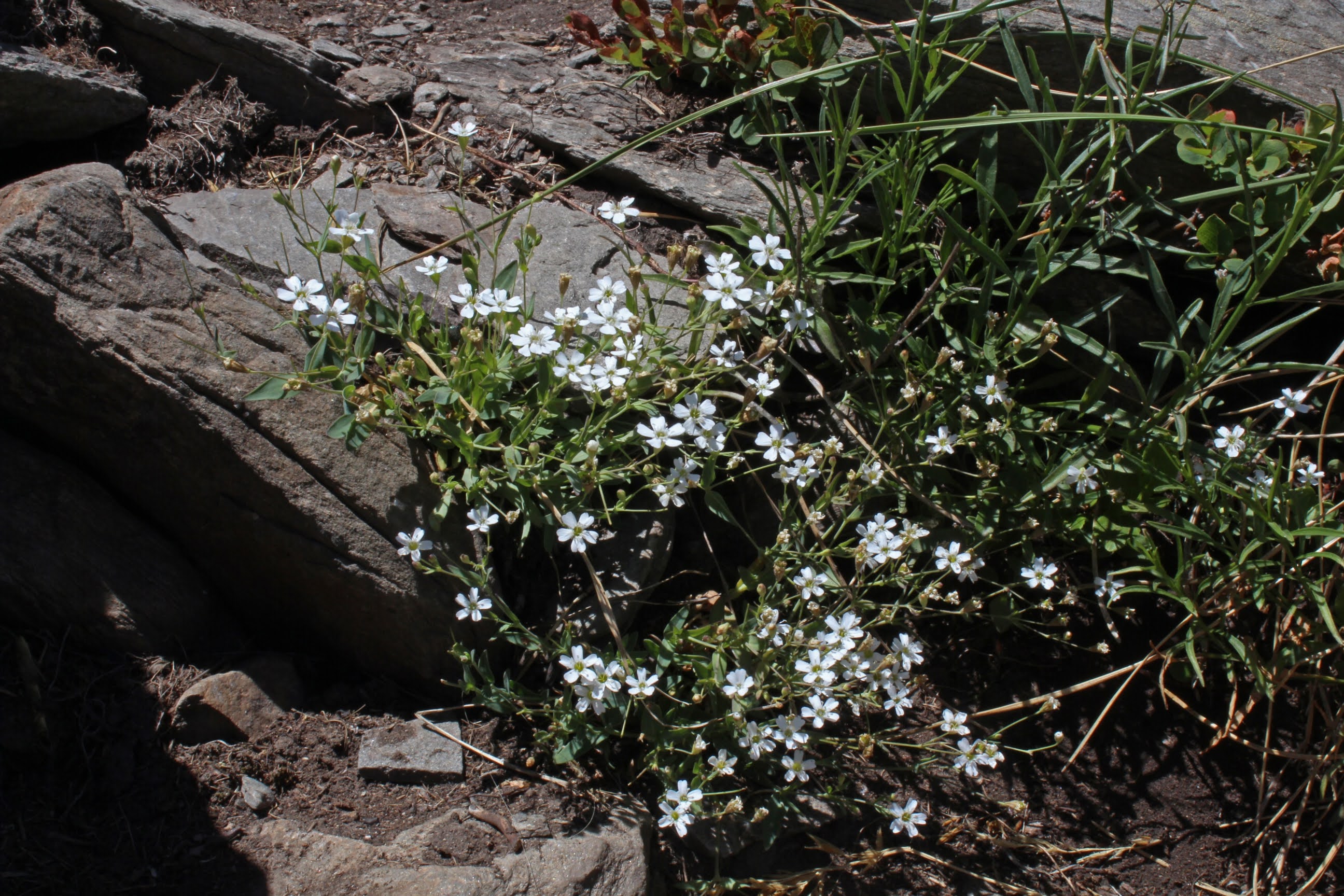
14 June 2022: Meadow near Mont Gerbier de Jonc (Google map)
15 June 2022: Vineyard east of Labastide-de-Virac (Google map)
15 June 2022: Gorges de l'Ardèche (Google map)
The objective of the day was to explore the Gorges de l'Ardèche, where "gorge" translates to "ravine" in French. Thanks to the limestone-rich soil, the river Ardèche has sculpted a deep and steep ravine through the landscape. While many people understandably opt for canoeing to access the river, reaching it on foot required a bit more effort. From the car, we descended along a steep rocky path to reach a trail that led us to the river's shore. The surrounding forest was primarily composed of Quercus ilex. During our journey, we came across several plant species that were not on our list yet, including Rosa arvensis, Cistus salviifolius, Cephalanthera longifolia and Teucrium botrys.
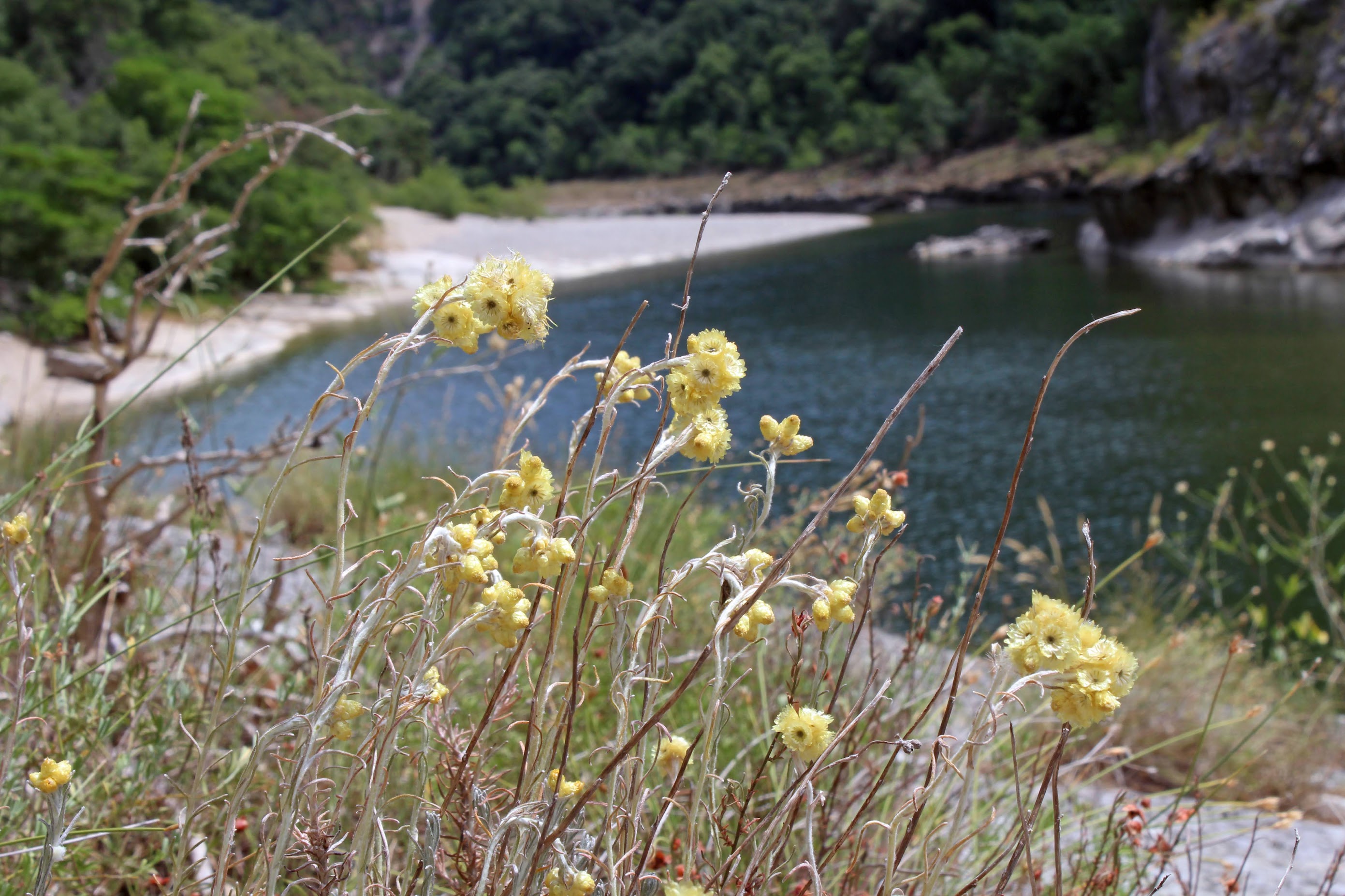
We followed the river banks for quite a while before ascending the steep ravine again. A narrow footpath led us from the river all the way up to a campsite where access was strictly restricted to customers only. Pretending to be camping guests, we made our way back to our car. The forest along the journey was still primarily dominated by Quercus ilex.
15 June 2022: Risseau des Esqueyras and Le Granzon near Berrias (Google map)
In the hot and arid region of the Ardèche, we hadn't been very fortunate in recording plant species from moist habitats. Therefore, we decided to visit the town of Berrias, where the small stream Risseau des Esqueyras flows into the Granzon River. Despite the challenging conditions, the risseau still supported some life, as we observed numerous crayfish huddled together in the last remaining water-filled parts of the stream. Here, we made note of Sparganium erectum, Carex pendula and Mentha suaveolens.
Afterward, we crossed a former arable field that was home to species like Amaranthus retroflexus, Panicum miliaceum and Setaria verticillata. On the other side of the field, we reached the Granzon River. Descending to the water level, we strolled through the shallow water to a small gravel island. On this island, we recorded species such as Veronica anagallis-aquatica and Mentha pulegium.
16 June 2022: Naves (Google map)
The small town of Naves, near Les Vans, exemplifies the typical old Ardèchian charm, characterized by numerous stone houses and narrow streets. Finding parking in Naves can be somewhat challenging due to the town's location at the end of a cul-de-sac and the high number of visitors. However, we were fortunate to have a very small car, which allowed us to easily find a parking spot near the village, close to a hiking trail that led into the mountains.
16 June 2022: Villefort (Google map)
We parked our car right under the nose of two police officers who were randomly pulling cars over to conduct alcohol checks, when we suddenly realized we did not have a mandatory alcohol test with us. Fortunately, the officers showed no interest in us, allowing us to hunt for wild plant species without asking any questions. They were quite busy interrogating a young man who had unclear substances in plastic bags lying in his car.
On a rocky outcrop next to the road just outside the village, we recorded Barbarea verna, Saxifraga moschata and Tanacetum parthenium. Afterward, we headed into the town to buy an alcohol test, just in case. Rutger bought half a kilo of cherries at the local market as well, and as we enjoyed the cherries, we strolled back to our car, where the police officers were still dealing with the same young man. It was time for us to leave the scene quietly and unnoticed.
16 June 2022: Risseau des Morangiès (Google map)
In our quest to record more plant species from moist habitats, we decided to explore the Risseau des Morangiès, which flows into Lac de Villefort. This lake, situated amidst the hills of the Cévennes, serves as an enormous water reservoir. Our journey began by following a small path that ran parallel to the risseau, leading us through a dense Quercus ilex woodland. We recorded several new plant species like Cardamine flexuosa and Polystichum setiferum. The forest was lush and diverse, teeming with various plants, shrubs, and trees. It proved to be an ideal location to search for wild plants! Eventually, we made our way back to the car by following an asphalt road from a nearby camping site. Along this route, we made additional discoveries, recording Juncus tenuis, Senecio sylvaticus and Cytisus sessilifolius here.
16 June 2022: Alongside the D51 (Google map)
Back in Villefort, we decided to follow the D51, which ran alongside the breathtaking ravines of the river l’Altier. At the beginning of the road, there was a sign indicating "route barrée" (road closed), but since we observed other cars coming and going, we took a chance and decided to test our luck. It turned out that there were indeed construction sites along the road, but with a bit of patience from the construction workers and fellow drivers, we successfully navigated through every obstacle.
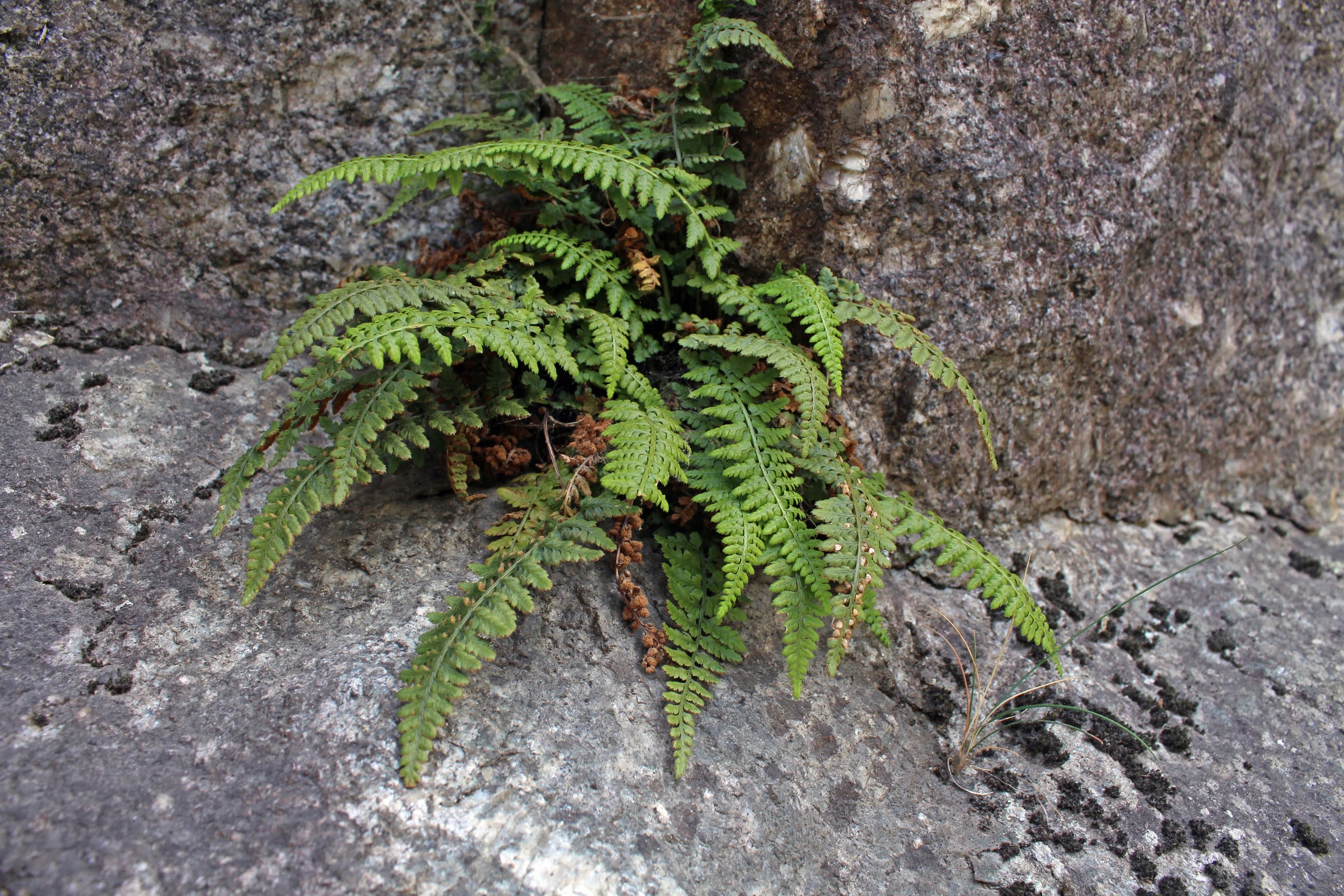
17 June 2022: The forest of Le Grand Tanargue (1511m) (Google map)
On the last day of our Botanical Journey in the Ardèche, the French government issued a code red warning due to the high temperatures. Despite the urgent call to stay indoors if possible, we embarked on another plant hunting trip. To avoid the heat, we decided to go to a ski-resort called Croix de Bauzon. The cable charts (that are disused during the summer, so we had to walk) run to the summit of Le Grand Tanargue, standing at 1511 meters above sea level. The hill was a combination of grassy slopes (used as ski slopes in the winter) and forests. While we explored both habitats, it became evident that the beech forest was the dominant feature on Le Grand Tanargue.
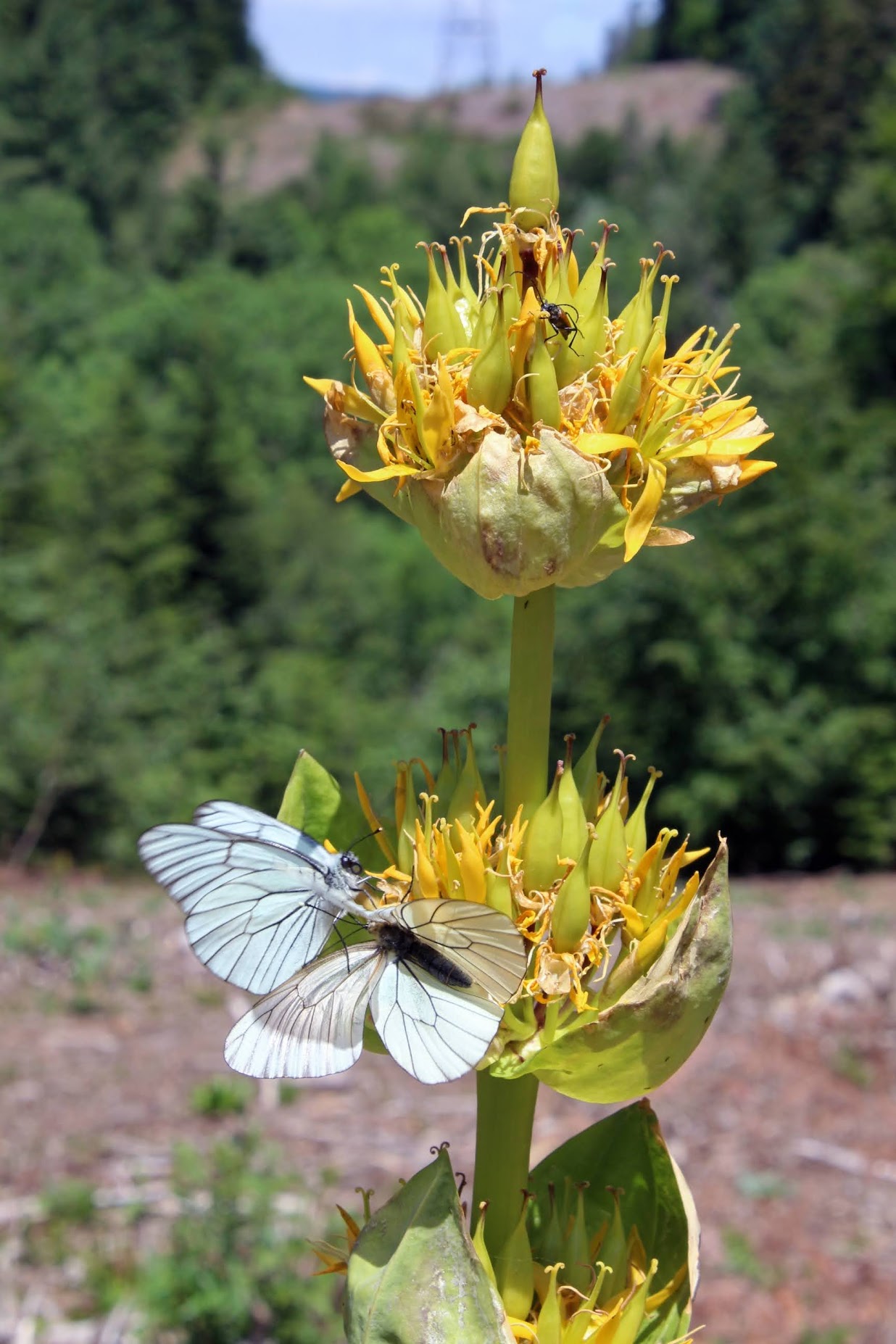
To make the adventure more challenging, we started a new list of plant species. So we also recorded plant species that we had already seen in the days before. Our walk began near the parking area, where within a few meters from our car, we recorded over a hundred plant species. Notable findings included Conopodium majus, Polygonatum verticillatum, Heracleum sphondylium subsp. sibiricum, Silene nutans and Campanula scheuchzeri. Moving on to the grassy ski slopes, we discovered Gentiana lutea, Ranunculus platanifolius and Meum athamanticum.

17 June 2022: Risseau de la Loubeyre (Google map)
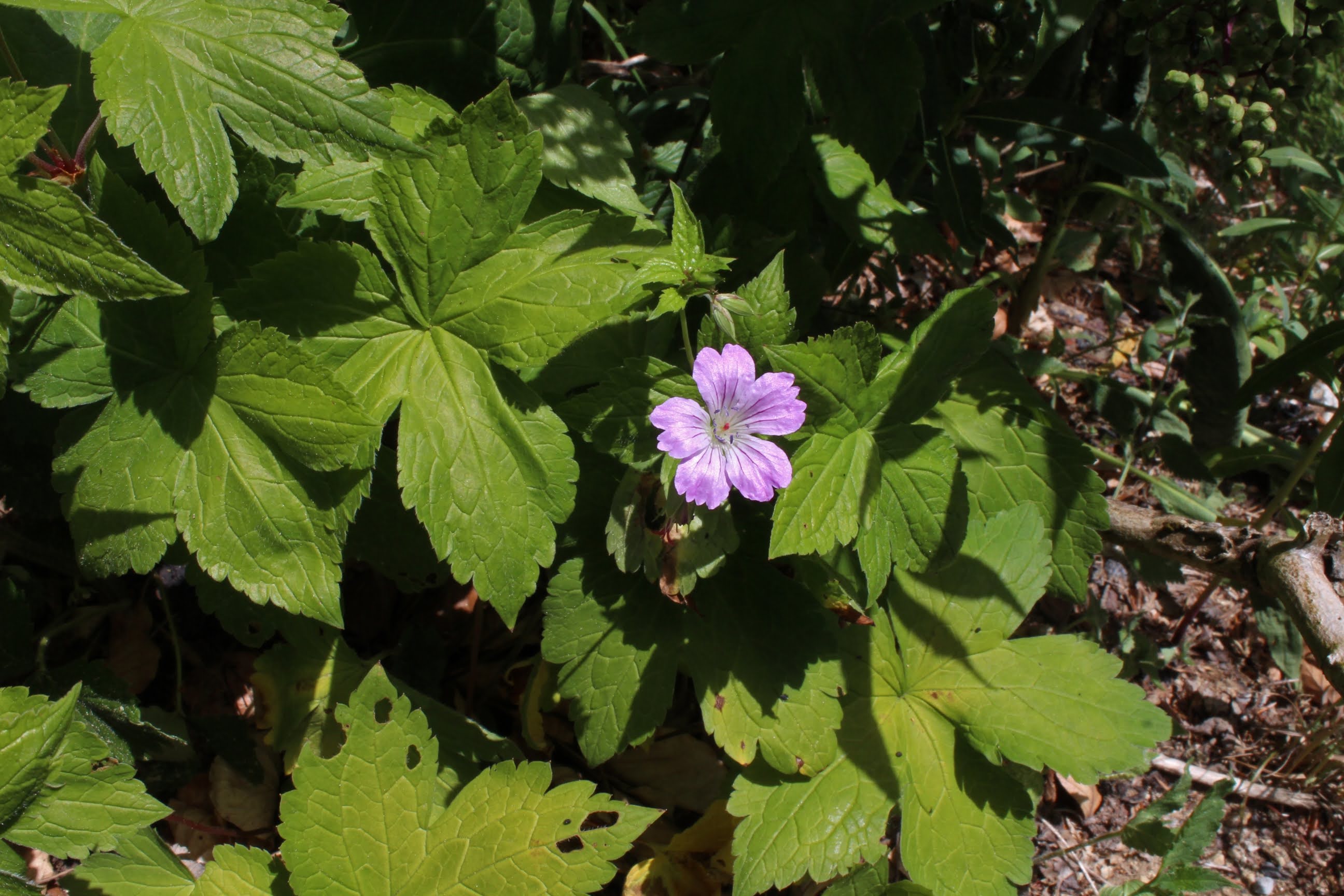
After this successful day we drove back to our holiday home. There was only one appropriate way to celebrate the fact that we had managed to record 822 different wild plant species in just one week:
List of the recorded plant species
PLEASE NOTE:
With the exception of the forest of Le Grand Tanargue, only the
first finding of each species is mentioned. This means that
species recorded on multiple dates, such as both on the 12th and
the 13th of June, are only noted on the 12th.
11 June 2022: Surroundings of Château de Chassagnes (Google map)
Acer platanoides
Agrimonia procera
Ailanthus altissima
Allium vineale
Anacamptis pyramidalis
Anagallis arvensis subsp. foemina
Aphyllanthes monspeliensis
Arenaria leptoclados
Artemisia vulgaris
Asplenium adiantum-nigrum
Asplenium trichomanes
Avena barbata
Avena fatua
Bituminaria bituminosa
Blackstonia perfoliata
Brachypodium phoenicoides
Bromopsis erecta
Carlina vulgaris
Castanea sativa
Catananche caerulea
Catapodium rigidum
Centranthus ruber
Cercis siliquastrum
Cervaria rivini
Chenopodium album
Cirsium arvense
Clematis vitalba
Clinopodium vulgare
Convolvulus arvensis
Cornus sanguinea
Coronilla minima
Corylus avellana
Crataegus monogyna
Crepis foetida
Cynodon dactylon
Dactylis glomerata
Daucus carota
Dorycnium pentaphyllum
Echium vulgare
Epipactis muelleri
Erigeron annuus
Erigeron sumatrensis
Eryngium campestre
Euphorbia prostrata
Ficus carica
Foeniculum vulgare
Fraxinus excelsior
Galium mollugo
Galium pumilum
Genista scorpius
Geranium columbinum
Geranium purpureum
Geranium rotundifolium
Geum urbanum
Hedera helix
Heliotropium europaeum
Helleborus foetidus
Hibiscus syriacus
Himantoglossum hircinum
Hypericum perforatum
Hypochaeris radicata
Jacobaea erucifolia
Juniperus communis
Knautia arvensis
Lactuca sativa
Lactuca serriola
Lapsana communis
Lathyrus latifolius
Lathyrus sylvestris
Laurus nobilis
Leucanthemum vulgare
Linum campanulatum
Lonicera periclymenum
Lotus spec.
Malva setigera
Malva sylvestris
Melilotus officinalis
Noccaea perfoliata
Onobrychis caput-galli
Ononis arvensis
Parietaria judaica
Parthenocissus vitacea
Picris hieracioides
Pilosella officinarum
Plantago lanceolata
Poa annua
Poa trivialis
Polygala calcarea
Polygonum aviculare
Populus nigra 'italica'
Potentilla verna
Poterium sanguisorba
Prunella laciniata
Quercus pubescens
Ranunculus bulbosus
Rapistrum rugosum
Robinia pseudoacacia
Rubia tinctorum
Rubus ulmifolius
Scorzonera spec.
Sedum rupestre
Setaria viridis
Sonchus oleraceus
Sonchus tenerrimus
Taraxacum officinale s.l.
Teucrium montanum
Thymus vulgaris
Torilis arvensis
Tragopogon porrifolius
Trifolium ochroleucon
Umbilicus rupestris
Verbena officinalis
Viburnum tinus
Vicia hirsuta
Viola hirta
Vitis vinifera subsp. vinifera
12 June 2022: Around Chassagnes (Google map)
Acer campestre
Acer monspessulanum
Acer negundo
Acer pseudoplatanus
Achillea millefolium
Adenocarpus complicatus
Aegilops cylindrica
Aegilops geniculata
Agrostis stolonifera
Aira caryophyllea
Alcea rosea
Allium sphaerocephalon
Alnus glutinosa
Althaea cannabina
Alyssum alyssoides
Ambrosia artemisiifolia
Amelanchier ovalis
Andryala integrifolia
Anisantha diandra
Anisantha madritensis
Anthoxanthum odoratum
Anthriscus sylvestris
Arabidopsis thaliana
Arabis hirsuta
Arabis turrita
Arenaria serpyllifolia
Aristolochia clematitis
Aristolochia rotunda
Arrhenatherum elatius
Artemisia verlotiorum
Arundo donax
Asparagus acutifolius
Asparagus officinalis
Asplenium ceterach
Astragalus monspessulanus
Ballota nigra
Barbarea vulgaris
Betula pendula
Bidens frondosa
Biscutella laevigata
Brachypodium pinnatum
Brachypodium sylvaticum
Brassicacea spec.
Briza media
Bromus arvensis
Bromus hordeaceus
Bromus rubens
Bromus squarrosus
Buglossoides purpurocaerulea
Buxus sempervirens
Calamintha spec.
Campanula cervicaria
Campanula medium
Capsella bursa-pastoris
Cardamine hirsuta
Carduus pycnocephalus
Carex distans
Carex divulsa + Carex leersii
Carex flacca
Carex humilis
Carex otrubae
Carex remota
Carex spec.
Carex spicata
Celtis australis
Centaurea aspera
Centaurea jacea
Centaurea jacea subsp. jacea
Centaurea maculosa
Centranthus calcitrapae
Cephalaria leucantha
Cerastium brachypetalum
Cerastium glomeratum
Ceratochloa cathartica
Chelidonium majus
Chondrilla juncea
Cichorium intybus
Cirsium vulgare
Convolvulus sepium
Coronilla emerus
Crepis capillaris
Crepis setosa
Cymbalaria muralis
Cyperus eragrostis
Cytisus scoparius
Dianthus armeria
Dianthus carthusianorum
Dianthus gratianopolitanus
Digitalis lutea
Dipsacus fullonum
Eleocharis palustris
Elymus repens
Equisetum arvense
Eragrostis cilianensis
Erodium chium
Euonymus europaeus
Eupatorium cannabinum
Euphorbia amygdaloides
Euphorbia cyparissias
Euphorbia exigua
Euphorbia characias
Fallopia japonica
Filipendula ulmaria
Filipendula vulgaris
Fraxinus ornus
Fumaria vaillantii
Galium aparine
Galium parisiense
Galium spurium
Galium verum
Geranium dissectum
Geranium lucidum
Gleditsia triacanthos
Glyceria notata
Gratiola officinalis
Helianthemum nummularium
Helianthus tuberosus
Helminthotheca echioides
Helosciadium nodiflorum
Hemerocallis fulva
Hieracium glaucinum
Holcus lanatus
Hordeum murinum
Humulus lupulus
Inula spiraeifolia
Iris foetidissima
Iris pseudacorus
Jasione montana
Juglans regia
Juncus articulatus
Juncus compressus
Juncus inflexus
Knautia dipsacifolia
Lactuca perennis
Lathyrus pratensis
Lavandula angustifolia
Leersia oryzoides
Lepidium campestre
Lepidium draba
Ligustrum vulgare
Linaria spec.
Linum tenuifolium
Lolium perenne
Lonicera etrusca
Lotus corniculatus
Lotus pedunculatus
Lunaria annua
Lysimachia vulgaris
Lythrum salicaria
Malva pusilla
Medicago falcata
Medicago lupulina
Medicago minima
Medicago polymorpha
Medicago sativa
Melica ciliata
Melica uniflora
Melittis melissophyllum
Mentha longifolia
Mercurialis perennis
Muscari comosum
Myriophyllum spicatum
Nasturtium officinale
Oenothera x fallax (O. biennis x glazioviana)
Ononis natrix
Ononis spinosa
Origanum vulgare
Orlaya grandiflora
Orobanche hederae
Orobanche reticulata
Osmunda regalis
Persicaria hydropiper
Phalaris arundinacea
Phleum phleoides
Pistacia lentiscus
Plantago arenaria
Plantago major
Poa bulbosa
Poa nemoralis
Poa pratensis subsp. angustifolia
Polycarpon tetraphyllum
Polypodium spec.
Polypogon viridis
Populus alba
Portulaca oleracea
Potentilla reptans
Primula veris
Prunella hyssopifolia
Prunella vulgaris
Prunus avium
Prunus cerasifera
Prunus mahaleb
Pteridium aquilinum
Pulicaria dysenterica
Pyracantha coccinea
Quercus cerris
Quercus ilex
Ranunculus acris
Raphanus raphanistrum
Rhamnus alaternus
Rostraria cristata
Rumex acetosa
Rumex acetosella
Rumex conglomeratus
Rumex pulcher
Ruscus aculeatus
Sabulina tenuifolia
Salix alba
Salix caprea
Salix purpurea
Salvia pratensis
Sambucus ebulus
Saponaria officinalis
Schedonorus arundinaceus
Schedonorus pratensis
Securigera varia
Sedum acre
Sedum album
Sedum dasyphyllum
Silene italica
Silene latifolia
Silene vulgaris
Sisymbrium officinale
Smilax aspera
Sorbus aucuparia
Sorbus torminalis
Sorghum halepense
Stachys recta
Stellaria media
Stipa pennata
Syringa vulgaris
Tamus communis
Tanacetum corymbosum
Teucrium chamaedrys
Teucrium flavum
Teucrium polium
Thymus pulegioides
Tilia platyphyllos
Trachycarpus fortunei
Tragus racemosus
Trifolium arvense
Trifolium campestre
Trifolium medium
Trifolium pratense
Trifolium repens
Trifolium stellatum
Trisetum flavescens
Tussilago farfara
Typha latifolia
Urtica dioica
Verbascum blattaria
Verbascum pulverulentum
Veronica arvensis
Veronica catenata
Viburnum lantana
Vicia lutea
Vicia sylvatica
Vicia villosa
Xanthium spec.
13 June 2022: Around Le Cheneviou (1149m) (Google map)
Abies alba
Abies grandis
Agrostis capillaris
Ajuga reptans
Alchemilla saxatilis
Anemone nemorosa
Anthericum liliago
Arctium minus
Armeria arenaria
Arnica montana
Arnoseris minima
Artemisia absinthium
Athyrium filix-femina
Avenella flexuosa
Avenula pubescens
Barbarea intermedia
Calluna vulgaris
Campanula rotundifolia
Cardamine impatiens
Carduus rhaeticus
Carex caryophyllea
Carex leporina
Carex nigra
Carex pilulifera
Centaurea jacea subsp. nigra
Centaurea pectinata
Cerastium arvense
Cerastium fontanum
Chamaenerion angustifolium
Cirsium palustre
Coincya monensis
Conopodium majus
Cynosurus cristatus
Cytisus oromediterraneus
Dactylorhiza maculata
Danthonia decumbens
Deschampsia cespitosa
Dianthus deltoides
Digitalis purpurea
Dryopteris affinis
Epilobium montanum
Fagus sylvatica
Fallopia dumetorum
Festuca filiformis
Festuca marginata
Fragaria vesca
Galium rotundifolium
Galium saxatile
Genista anglica
Genista hispanica
Genista pilosa
Genista tinctoria
Genistella sagittalis
Gentiana lutea
Geranium pyrenaicum
Geranium robertianum
Herniaria hirsuta
Hieracium murorum
Hippocrepis comosa
Holcus mollis
Hypericum humifusum
Hypochaeris maculata
Ilex aquifolium
Jacobaea adonidifolia
Juncus acutiflorus
Juncus effusus
Koeleria macrantha
Lathyrus linifolius
Leontodon autumnalis
Leontodon hispidus
Leontodon pyrenaicus
Lepidium heterophyllum
Linaria repens
Linaria vulgaris
Luzula campestris
Luzula nivea
Matricaria discoidea
Melampyrum pratense
Meum athamanticum
Montia fontana
Mycelis muralis
Narcissus poeticus
Nardus stricta
Oenanthe silaifolia
Ornithogalum umbellatum
Orobanche rapum-genistae
Oxalis acetosella
Paronychia polygonifolia
Persicaria bistorta
Peucedanum ostruthium
Peucedanum palustre
Phleum nodosum
Phyteuma nigrum
Picea abies
Picea sitchensis
Pinus sylvestris
Plantago alpina
Poa pratensis
Polygala serpyllifolia
Polygala vulgaris
Potentilla argentea
Potentilla erecta
Prenanthes purpurea
Quercus petraea
Rhinanthus minor
Rosa canina s.l.
Rosa Subsec. Rubigineae
Rubus idaeus
Sagina saginoides
Salix cinerea
Sanguisorba officinalis
Scabiosa columbaria
Scleranthus perennis
Scorzonera humilis
Senecio ovatus
Silene nutans
Solidago virgaurea
Sorbus aria
Spergula morisonii
Stellaria graminea
Succisa pratensis
Taxus baccata
Teesdalia nudicaulis
Teucrium scorodonia
Thesium alpinum
Tragopogon pratensis
Vaccinium myrtillus
Veratrum album
Veronica chamaedrys
Veronica officinalis
Veronica serpyllifolia
Viola canina
Viola persicifolia
Viola reichenbachiana + Viola riviniana + Viola x bavarica
13 June 2022: Ruisseau de Petit Paris near Montselgues (Google map)
Anthyllis vulneraria
Caltha palustris
Cardamine pratensis
Carex echinata
Carex hirta
Carex pallescens
Chrysosplenium oppositifolium
Cirsium eriophorum
Dryopteris carthusiana
Dryopteris filix-mas
Galeopsis segetum
Galium palustre
Heracleum sphondylium
Juncus bufonius
Mentha aquatica
Myosotis scorpioides
Ranunculus platanifolius
Ranunculus repens
Sagina procumbens
Scrophularia nodosa
Spergularia rubra
Trocdaris verticillatum
Viola palustris
13 June 2022: Sablières (Google map)
Amaranthus deflexus
Dysphania ambrosioides
Epilobium lanceolatum
Erica cinerea
Linaria pelisseriana
Malva neglecta
Phytolacca americana
Pseudotsuga menziesii
Rumex obtusifolius
Sambucus nigra
Solanum dulcamara
13 June 2022: Les Chanels (Google map)
Acanthus mollis
Anagallis arvensis
Antirrhinum majus
Asarina procumbens
Briza maxima
Campanula erinus
Centaurium erythraea
Cortaderia selloana
Cynosurus echinatus
Digitaria ischaemum
Lactuca virosa
Oxalis corniculata
Peucedanum cervaria
Senecio inaequidens
Solanum villosum
14 June 2022: D122 near Suc de Montivernoux (1312m)
(Google map)
Alchemilla monticola
Alchemilla xanthochlora
Blitum bonus-henricus
Carex canescens
Carex demissa
Carex panicea
Carex rostrata
Carex sylvatica
Chaerophyllum hirsutum
Comarum palustre
Crepis paludosa
Epilobium palustre
Equisetum fluviatile
Equisetum sylvaticum
Eriophorum angustifolium
Euphrasia stricta s.l.
Festuca rubra
Galium uliginosum
Gentianella campestris
Gymnadenia conopsea
Hypericum maculatum
Juncus squarrosus
Linum catharticum
Myosotis arvensis
Pedicularis palustris
Phyteuma orbiculare
Pilosella lactucella
Pimpinella saxifraga
Pinguicula vulgaris
Plantago media
Platanthera chlorantha
Poa chaixii
Salix aurita
Salix repens
Saxifraga granulata
Saxifraga stellaris
Silene dioica
Silene flos-cuculi
Stellaria alsine
Thesium pyrenaicum
Trifolium spadiceum
Trollius europaeus
Valeriana dioica
Veronica beccabunga
Vicia cracca
Viola calcarata
14 June 2022: Col du Pranlet / Suc d’Ourseyre (1371m) (Google map)
Aira praecox
Antennaria dioica
Campanula scheuchzeri
Cicerbita plumieri
Colchicum autumnale
Crepis mollis
Crocus spec.
Cytisus purgans
Dactylorhiza sambucina
Epilobium brachycarpum
Fritillaria meleagris
Galeopsis tetrahit
Gentiana cruciata
Geranium sylvaticum
Juniperus oxycedrus
Larix decidua
Lilium martagon
Pinus uncinata
Ranunculus montanus
Rumex x pratensis (R. crispus x obtusifolius)
Sambucus racemosa
Scleranthus annuus
Silene rupestris
Valeriana tripteris
Vicia sepium
14 June 2022: Mont Gerbier de Jonc (1551m) (Google map)
Calamagrostis arundinacea
Festuca altissima
Lamium album
Laserpitium latifolium
Lonicera alpigena
Onobrychis viciifolia
Populus tremula
Rosa micrantha
Rosa pendulina
14 June 2022: Meadow near Mont Gerbier de Jonc (Google map)
Anisantha tectorum
Dactylorhiza viridis
Juncus conglomeratus
Juncus filiformis
Pedicularis sylvatica
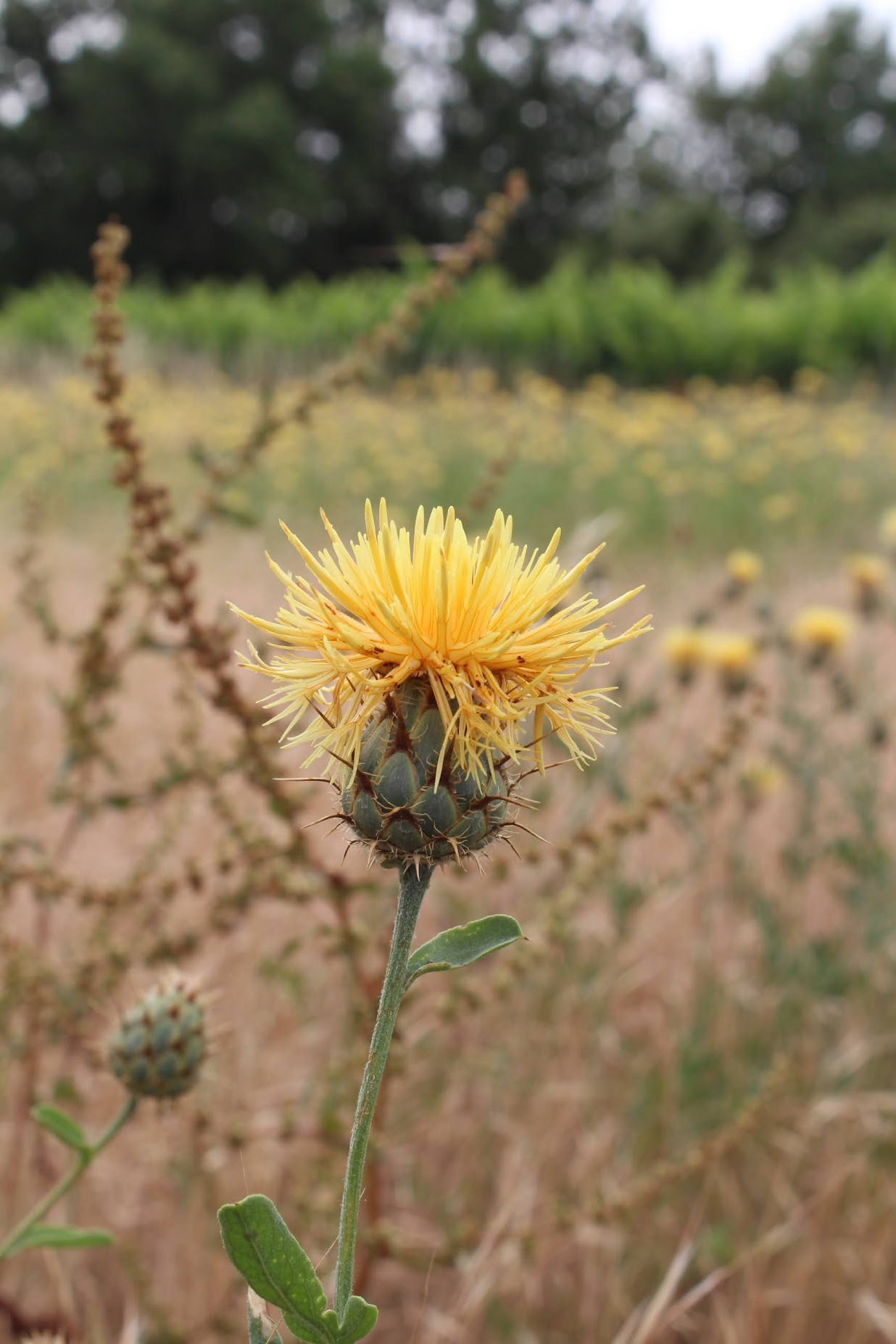
15 June 2022: Vineyard east of Labastide-de-Virac (Google map)
Centaurea collina
Clematis recta
Convolvulus lineatus
Dorycnium hirsutum
Echinops rito
Euphorbia seguieriana
Filago germanica
Ononis minutissima
Orobanche alba
Vulpia myuros
15 June 2022: Gorges de l'Ardèche (Google map)
Ajuga chamaepitys
Arbutus unedo
Bryonia dioica
Campanula persicifolia
Campanula rapunculus
Carex alba
Cephalanthera longifolia
Cistus salviifolius
Collinsia heterophylla
Cuscuta campestris
Elymus pungens subsp. campestris
Erysimum nevadense
Euphorbia esula
Euphorbia lathyris
Fumana procumbens
Helichrysum italicum
Impatiens balfourii
Impatiens glandulifera
Impatiens parviflora
Inula helenioides
Jacobaea vulgaris
Lathyrus aphaca
Melica minuta
Melissa officinalis
Morus alba
Morus nigra
Osmanthus heterophyllus
Parietaria officinalis
Piptatherum miliaceum
Platanus x hispanica (P. occidentalis x orientalis)
Polygonatum odoratum
Potentilla recta
Ranunculus aquatilis
Rorippa palustris
Rorippa sylvestris
Rosa arvensis
Salix eleagnos
Schedonorus giganteus
Scirpoides holoschoenus
Selaginella denticulata
Sonchus asper
Teucrium botrys
Thalictrum minus
Thymus spec.
Tordylium maximum
Trifolium rubens
Ulmus minor
Urospermum dalechampii
Vincetoxicum nigrum
15 June 2022: Risseau des Esqueyras and Le Granzon near Berrias (Google map)
Alisma plantago-aquatica
Amaranthus retroflexus
Atriplex patula
Carex pendula
Epilobium hirsutum
Equisetum variegatum
Mentha pulegium
Mentha suaveolens
Panicum miliaceum
Pistacia terebinthus
Samolus valerandi
Scrophularia umbrosa
Setaria verticillata
Sparganium erectum
Veronica anagallis-aquatica
Viburnum opulus
16 June 2022: Naves (Google map)
Amaranthus blitum
Buddleja davidii
Campanula portenschlagiana
Campanula poscharskyana
Crupina vulgaris
Erigeron karvinskianus
Galium corrudifolium
Globularia nudicaulis
Mercurialis annua
Olea europaea
Oxalis debilis
Passiflora caerulea
Ruta linifolia
Saponaria ocymoides
Sedum hirsutum
Sedum ochroleucum
Staehelina dubia
Verbascum thapsus
16 June 2022: Villefort (Google map)
Barbarea verna
Epilobium spec.
Erodium cicutarium
Lepidium virginicum
Malus x domestica
Malva moschata
Phegopteris connectilis
Potentilla rupestris
Saxifraga moschata
Silene spec.
Solanum nigrum
Tanacetum parthenium
16 June 2022: Risseau des Morangiès (Google map)
Cardamine flexuosa
Chaerophyllum temulentum
Cytisus sessilifolius
Euphorbia dulcis
Heracleum sphondylium var. angustifolium
Juncus tenuis
Moehringia trinervia
Oenothera glazioviana
Phyteuma spicatum
Polystichum setiferum
Primula elatior
Prunella grandiflora
Senecio sylvaticus
Stellaria holostea
16 June 2022: Alongside the D51 (Google map)
Allium ampeloprasum
Angelica sylvestris
Aquilegia vulgaris
Artemisia campestris
Asplenium obovatum
Campanula glomerata
Campanula trachelium
Carex digitata
Carex lepidocarpa
Carex sempervirens
Circaea lutetiana
Dactylorhiza fuchsii
Epilobium roseum
Hieracium amplexicaule
Hypericum montanum
Hypericum tetrapterum
Leucanthemum monspeliense
Molinia caerulea
Molopospermum peloponnesiacum
Sedum hispanicum
Sedum telephium subsp. maximum
Sorbaria sorbifolia
Valeriana officinalis
Vincetoxicum hirundinaria
17 June 2022: The forest of Le Grand Tanargue (1511m) (Google map)
please note: this is a comprehensive list, so only species marked with * are new to this BotanicalJourney !Abies alba
Acer pseudoplatanus
Achillea millefolium
Aconitum lycoctonum subsp. vulparia (*)
Agrostis capillaris
Ajuga reptans
Alchemilla glabra (*)
Alchemilla saxatilis
Alliaria petiolata (*)
Anemone nemorosa
Anisantha tectorum
Anthoxanthum odoratum
Anthriscus sylvestris
Arnica montana
Arrhenatherum elatius
Artemisia vulgaris
Athyrium filix-femina
Avenella flexuosa
Avenella flexuosa
Barbarea intermedia
Blitum bonus-henricus
Bromus sitchensis (*)
Calamintha grandiflora (*)
Calluna vulgaris
Campanula rotundifolia
Campanula scheuchzeri
Cardamine flexuosa
Carduus rhaeticus
Carex leporina
Carex pallescens
Carex pilulifera
Centaurea jacea subsp. nigra
Centaurea pectinata
Cerastium arvense
Cerastium brachypetalum
Chamaenerion angustifolium
Cicerbita plumieri
Cirsium arvense
Coincya monensis
Conopodium majus
Cytisus oromediterraneus
Dactylis glomerata
Deschampsia cespitosa
Digitalis purpurea
Doronicum austriacum (*)
Dryopteris carthusiana
Dryopteris dilatata (*)
Dryopteris filix-mas
Echium vulgare
Epilobium montanum
Fagus sylvatica
Festuca filiformis
Festuca rubra
Fraxinus excelsior
Galeopsis spec. (*)
Galium mollugo
Galium odoratum (*)
Galium rotundifolium
Galium saxatile
Galium verum
Genista pilosa
Genista tinctoria
Gentiana lutea
Geranium robertianum
Geum urbanum
Gnaphalium sylvaticum (*)
Gymnocarpium robertianum (*)
Heracleum sphondylium subsp. sibiricum (*)
Herniaria hirsuta
Hieracium murorum
Hieracium umbellatum (*)
Holcus mollis
Hypericum maculatum
Hypericum perforatum
Hypochaeris radicata
Jacobaea adonidifolia
Jasione montana
Juncus effusus
Knautia dipsacifolia
Lamiastrum galeobdolon (*)
Lapsana communis
Lathyrus pratensis
Leontodon hispidus
Leontodon pyrenaicus
Lepidium heterophyllum
Leucanthemum monspeliense
Leucanthemum vulgare
Linaria repens
Lonicera nigra (*)
Lotus corniculatus
Luzula multiflora (*)
Luzula nivea
Luzula spicata (*)
Luzula sylvatica (*)
Maianthemum bifolium (*)
Melampyrum pratense
Meum athamanticum
Mycelis muralis
Myosotis arvensis
Myosotis scorpioides
Myosotis sylvatica (*)
Narcissus poeticus
Nardus stricta
Persicaria bistorta
Petasites albus (*)
Peucedanum ostruthium
Phleum pratense (*)
Phyteuma nigrum
Picris hieracioides
Pilosella officinarum
Pinus nigra (*)
Plantago lanceolata
Plantago major
Poa annua
Poa compressa (*)
Poa nemoralis
Poa pratensis
Polygonatum verticillatum (*)
Polygonum aviculare
Potentilla erecta
Prenanthes purpurea
Prunella vulgaris
Quercus petraea
Ranunculus acris
Ranunculus platanifolius
Ranunculus repens
Rosa pendulina
Rubus idaeus
Rumex acetosa
Rumex acetosella
Rumex alpestris (*)
Sagina procumbens
Salix aurita
Salix caprea
Salix cinerea
Sambucus racemosa
Sanguisorba officinalis
Schedonorus arundinaceus
Scleranthus annuus
Scleranthus perennis
Scorzoneroides autumnalis (*)
Scrophularia nodosa
Senecio hercynicus (*)
Senecio ovatus
Serratula tinctoria (*)
Silene dioica
Silene nutans
Silene vulgaris
Solidago virgaurea
Sorbus aria
Sorbus aucuparia
Spergularia rubra
Stellaria graminea
Stellaria nemorum (*)
Streptopus amplexifolius (*)
Succisa pratensis
Taraxacum officinale s.l.
Teucrium scorodonia
Thesium alpinum
Tragopogon pratensis
Trifolium pratense
Trifolium repens
Trisetum flavescens
Tussilago farfara
Urtica dioica
Vaccinium myrtillus
Valeriana tripteris
Verbascum thapsus
Veronica chamaedrys
Veronica officinalis
Veronica serpyllifolia
Vicia cracca
Vicia sepium
Viola hirta
Viola palustris
Viola reichenbachiana + Viola riviniana + Viola x bavarica
Viola tricolor (*)
17 June 2022: Risseau de la Loubeyre (Google map)
Adenostyles alliariae
Cystopteris fragilis
Geranium nodosum